Alex Dawkins

DevOps and Software Engineer.
The Manual Photography Mini-Manual (with examples)
by Alex Dawkins
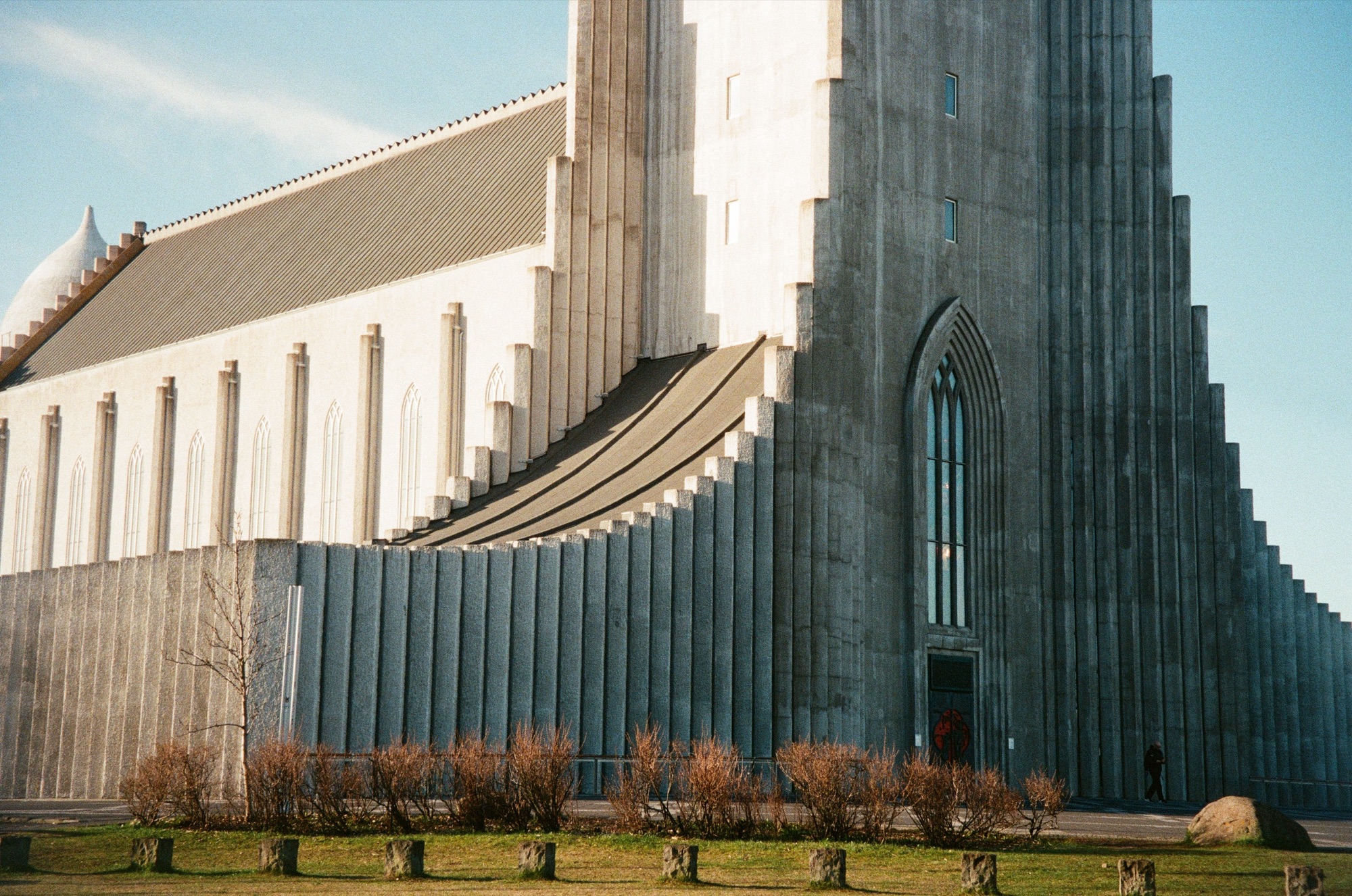
Written without AI
You’ve just got your new SLR: what do all the buttons and dials do?
Besides the shutter button, the most important dials are those that control your camera’s aperture and shutter speed.
Use your camera’s manual to point out where these are on your specific camera, but they will likely appear as 2 sets of numbers:
- 1.4, 2, 2.8, 4, 5.6, 8, 11, 22…
- 2000, 1000, 500, 250, 125, 60
The first is aperture: the smaller the number, the wider your lense is when you’re taking a photo. These numbers represent the denominator of a fraction: f/1.4, f/2, f/2.8, and so on.
The second is shutter speed. These numbers represent divisions of a second, so 2000 is 1/2000, 1000 is 1/1000, and so on.
Balancing Stops
To take a photo that isn’t too dark or too bright (exposed correctly), we need to balance shutter speed and aperture.
Like balancing a maths occasion, we can do whatever we want to one side, as long as we accommodate for it on the other. Each value of shutter speed and aperture is called a “stop” and in terms of exposure, they’re equivalent.
If a photo is well-exposed at aperture f/8.0 and 1/500 shutter speed:
- We can increase the aperture by 1 stop to f/5.6, and therefore must decrease the shutter speed by 1 stop to 1/250.
- We can decrease the aperture by 1 stop to f/11, and therefore must increase the shutter speed by 1 stop to 1/1000.
Similarly, we could do the inverse: choosing our shutter speed first.
- We can decrease the shutter speed by 1 stop to 1/250, and therefore increase the aperture by 1 stop to f/5.6.
- We can increase the shutter speed by 1 stop to 1/1000, and therefore decrease the aperture by 1 stop to f/11.
Cameras like the Olympus OM1, Canon AE1, and Nikon FE-2 feature built-in light-meters, which will tell us the correct shutter speed to use for a given aperture and scene. Either activate auto-mode, or follow the camera’s indications.
So, the camera will automatically choose a shutter speed for our chosen aperture. So how do we choose an aperture?
Choosing an Aperture
As well as exposure, aperture affects the depth-of-field (DoF) of our photograph. If we want a blurry foreground or background (called bokeh), we might choose a lower aperture like f/1.4.
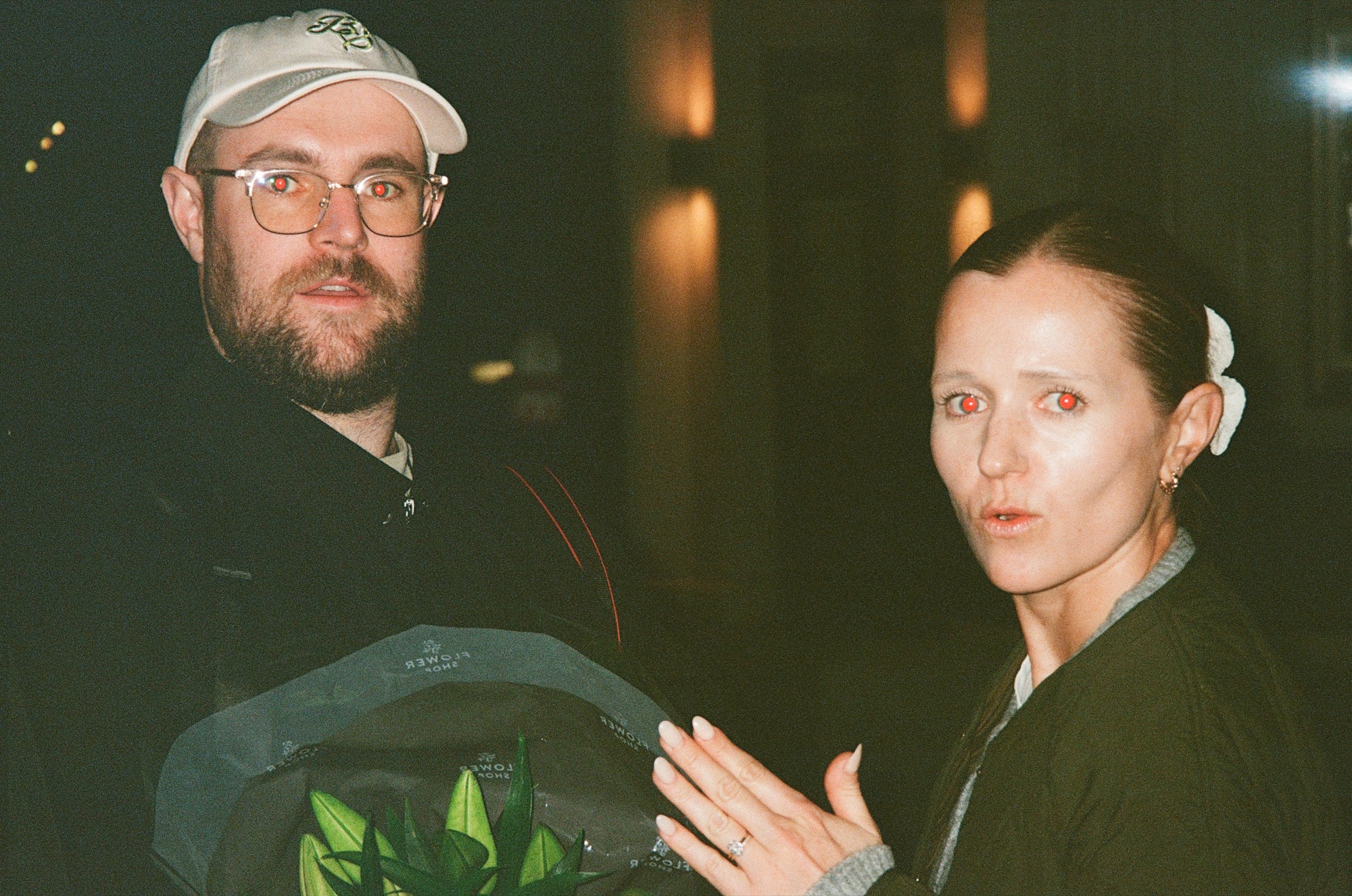
An example of a photograph with a shallow DoF: notice how the lights behind the subjects are softer. The use of a flash also means that there is little motion blur due to a fast shutter speed, even though the subjects are moving.
If we want more of our scene to be in focus, we can choose a smaller aperture (larger number, like f/22).
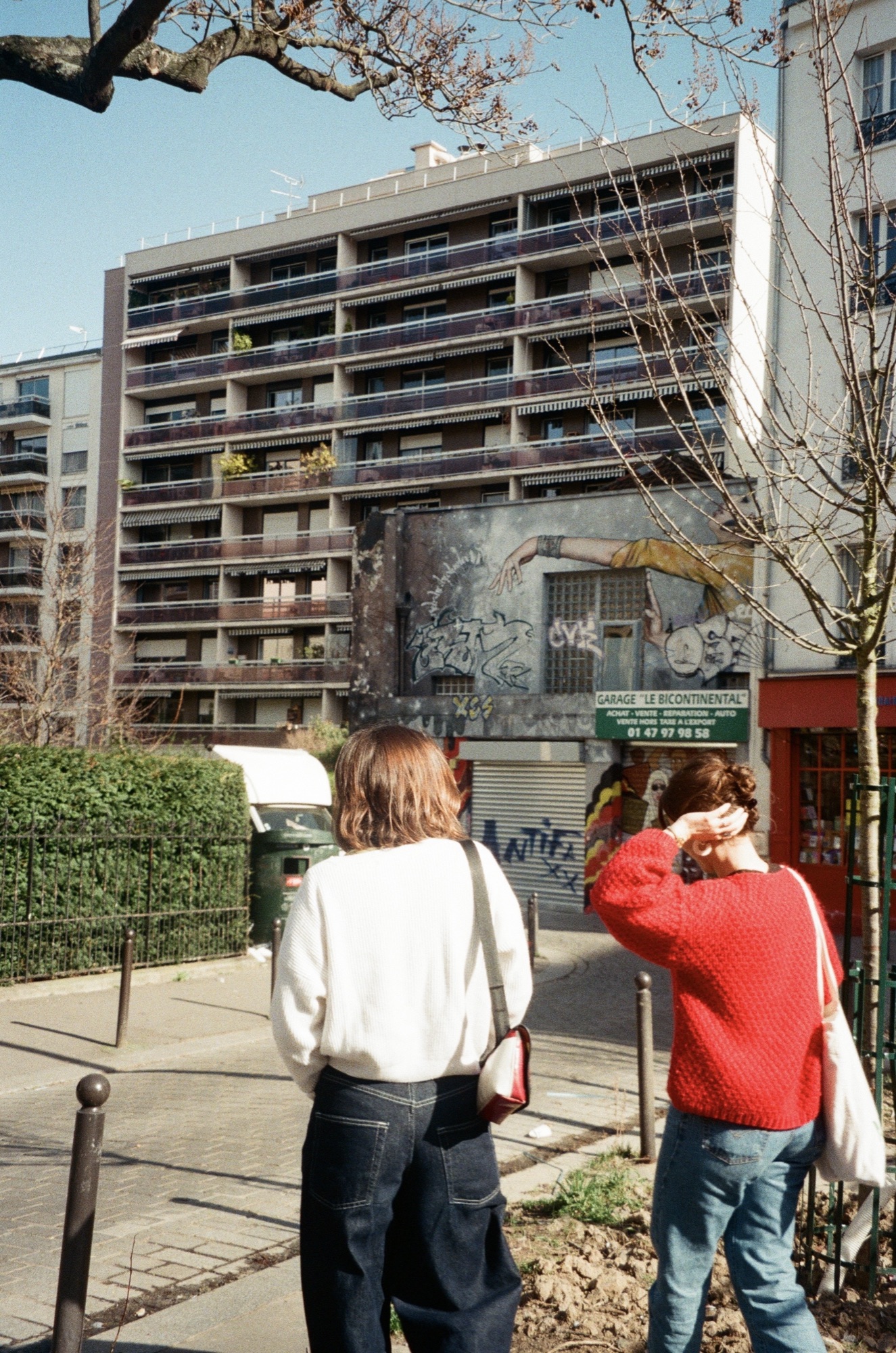
And an example of a photograph with a larger DoF: the subjects and the background are (mostly!) in focus. This was taken in bright daylight, so there was lots of light to allow for a smaller aperture and a quick shutter speed.
Compromising
f/22 is quite a small aperture, so the camera would choose a slower shutter speed to accommodate for less light being able to enter the camera.
In a scene without much light, the camera could choose 1/60 a second, which could cause our photo to be blurry if the camera is hand-held.
If we don’t want a blurry photo, we have a few options:
- Increase our shutter speed (probably to at least 1/250). This is 2 stops away, so we need to open our aperture by 2 stops to f/8.
- Don’t hold the camera - use a tripod or a stable surface.
- Introduce more light to the scene: either by moving to an area with more light, or using a flash.
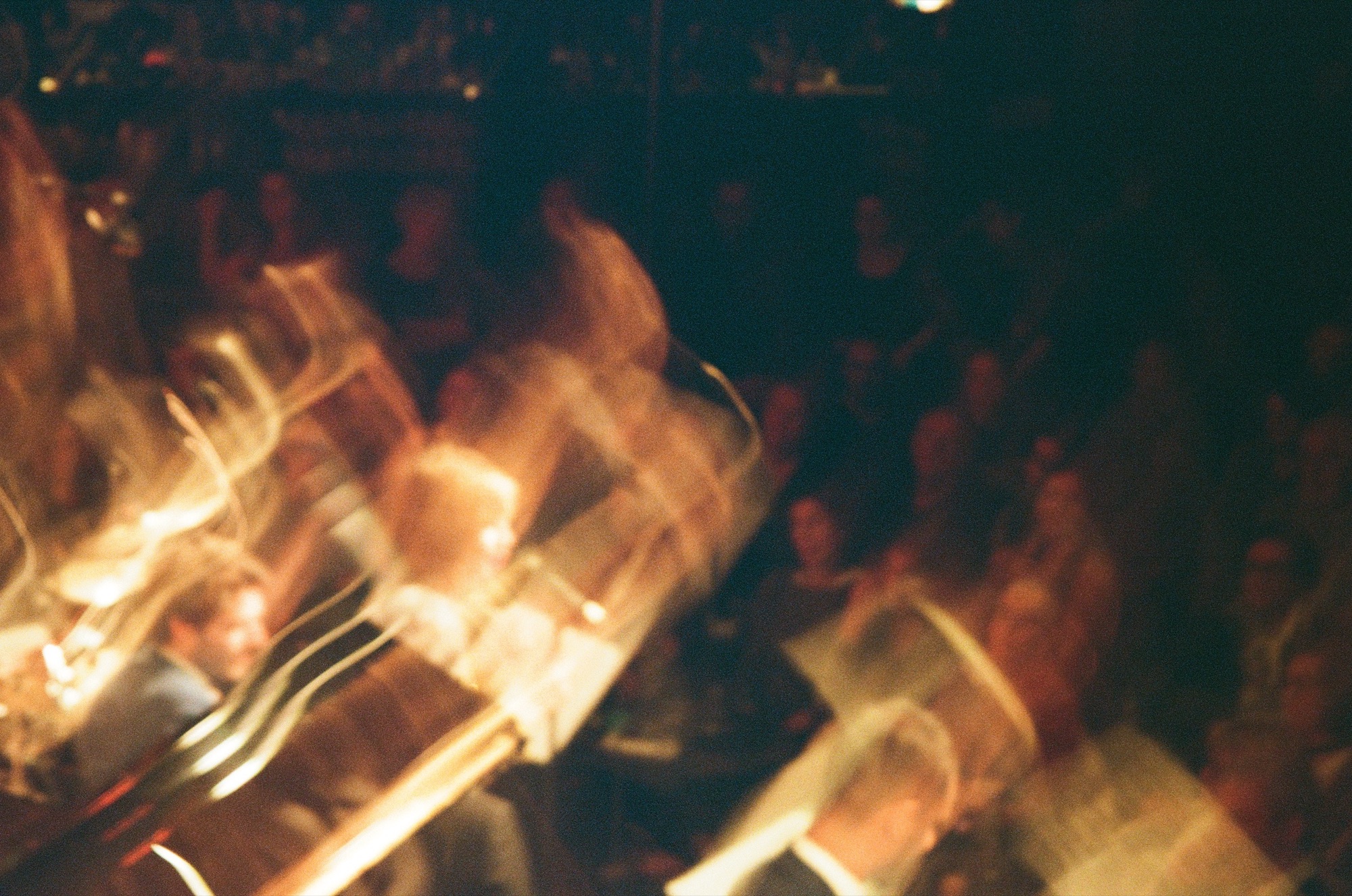
This photograph has a lot of motion blur: I should have kept the camera steadier.
The final side of the Exposure Triangle
We haven’t mentioned ISO (also referred to as ASA), which also influences exposure. ISO measures how sensitive a given film is: ISO 100 is less sensitive than ISO 400. We can use ISO in our stop balancing equation: ISO 400, f/8.0, 1/1000 would be exposed the same as ISO 200, f/4.0, 1/1000. We decrease the sensitivity of our film, and increase the aperture, both by 1 stop.
Each film has a set ISO sensitivity, so it’s not a very convenient member of the exposure triangle, but it’s something to keep in mind when you next buy film: a film with a higher ISO will be able to shoot in slightly darker scenarios, giving you more flexibility with aperture and shutter speed.
Making a decision
Now we know how to take a well-exposed photo, we can focus on using aperture and shutter speed to take good photos that aren’t only well-exposed, but also visually interesting.
- If we want to take quick photos without having to be accurate with our focussing, we can use a small aperture (like f/8.0) to get a larger depth-of-field.
- If we want to take a portrait, we can use a smaller aperture to have a stronger blur in the foreground and background, drawing attention to our subject. This looks great if there are lights in the background to create bokeh.
- If we’re taking a group portrait, we need to make sure the depth-of-field is big enough to include everyone in the group.
- If we want to take a photo of a moving subject, we might want to use a fast shutter speed to capture a single moment, freezing it in time.
- … but we could also choose a slow shutter speed to draw attention to their movement. I particularly like this effect for cars and bikes.
- If we want to take photos at night or in the evening, we might want to use a film with higher ISO, or a tripod.
- If it’s a particularly sunny day, we might need to use a smaller aperture than we would otherwise choose, as the camera’s shutter can only go so fast!
Most of the time, I have my camera set to f/8.0, and will only change this if the shutter speed needs to be faster than the camera can move it, or below 1/250 (or 1/125 if I’m feeling particularly steady-handed).
Practicing with a digital camera
If you’re new to manual photography, try practicing with a DSLR or even your phone in manual mode. Digital cameras also use aperture, shutter speed, and ISO: and have the advantage of the option of adjusting your ISO.
tags: photography